Iasos
Where Sea-Winds Shaped a City’s Destiny

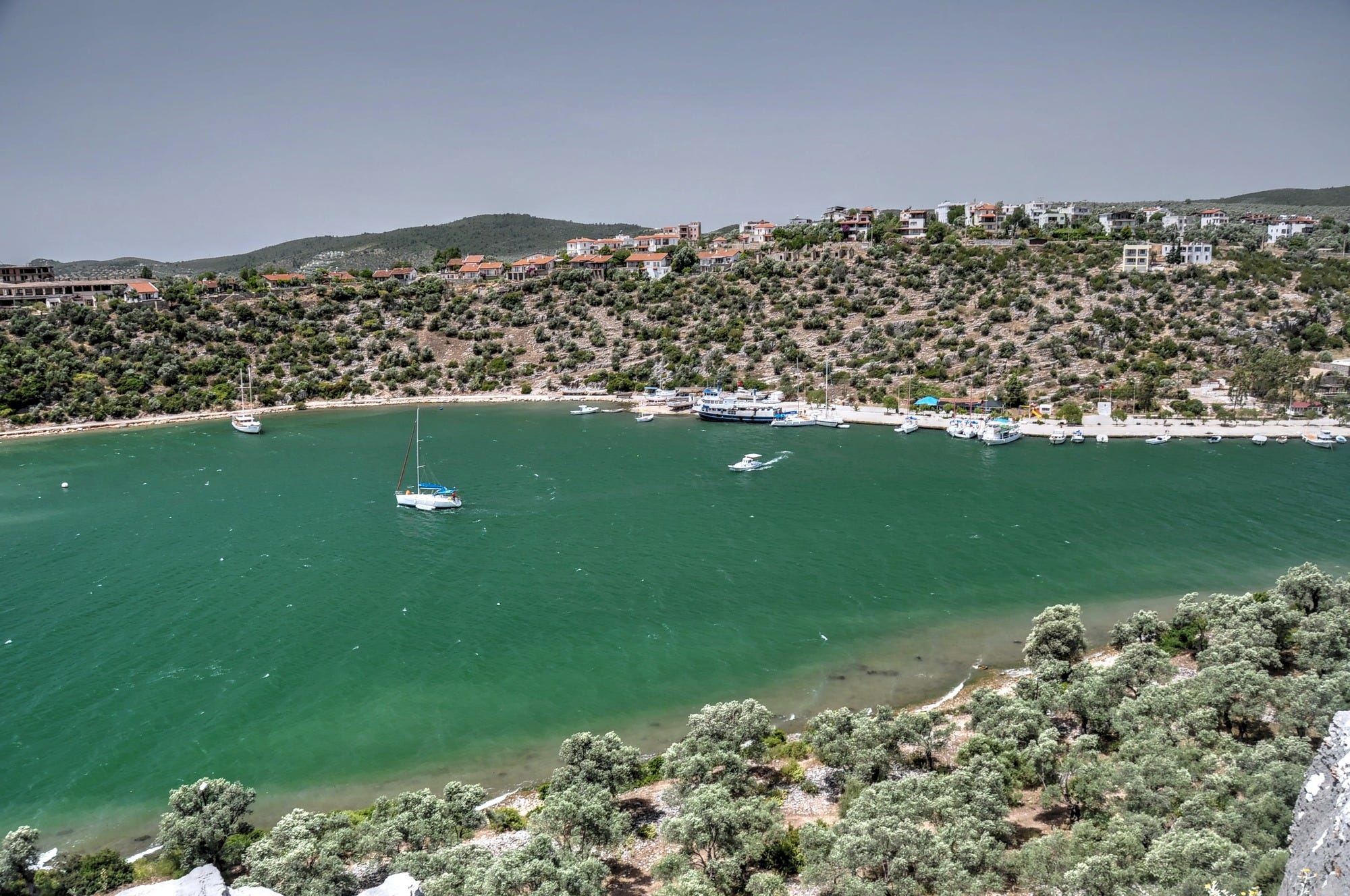
Along the quiet curve of the Bay of Güllük, where the Aegean Sea breaks gently against a rugged shoreline, the ancient city of Iasos rises above the modern fishing village of Kıyıkışlacık. Its acropolis still surveys the waters with the same calm authority it held thousands of years ago. Visitors who make the journey are rewarded with sweeping sea vistas, sunlit ruins, and a sense that the stones themselves remember stories older than recorded history.
According to classical writers, Iasos began as a distant outpost of Argos. Adventurers from the Peloponnese sailed across the Aegean to settle this promising coast, only to find themselves in fierce conflict with the native Carians. The struggle was so intense, ancient historians say, that the newcomers appealed to a heroic ally — the grandson of Poseidon. This descendant of the sea god not only came to their military aid but also helped swell the young colony’s population with fresh settlers. In the Greek imagination, the city’s beginnings were inseparable from the sea and from divine favour.
Modern archaeology, however, reveals a deeper past. Excavations show that the rocky peninsula of Iasos had been inhabited long before the Argive colonists arrived. As early as the third millennium BCE, the site formed part of the Cycladic cultural sphere, linked to island centres such as Naxos, Syros, and Milos. Layers of pottery, tools, and architectural remains trace a continuous life through the Geometric, Classical, Hellenistic, Roman, and Byzantine periods. Iasos was never just a colonial outpost — it was a place shaped by millennia of trade, migration, and maritime exchange.
Its lifeblood, both ancient and modern, has always been the sea. Fishing made Iasos wealthy, supplying salted fish and seafood to markets across the Aegean. Strabo, a Greek geographer writing in the early 1st century CE, preserved a humorous story that perfectly captures the city’s devotion to its fisheries. A cithara player once offered a public performance, and the audience listened politely — until the market bell rang, announcing that fresh fish had arrived. Instantly, the entire crowd vanished, leaving only one man behind. The player did not know, however, that the man was quite deaf. Grateful, the musician praised him for his love of music. The man stared blankly and asked, “What say you, has the bell rung?” When the musician confirmed it, the man cried, “Good bye to you!” and rushed off after the others. In Iasos, even the finest music could not rival the lure of the fish market.
Yet, the sea that sustained the city also inspired its most poignant legend. In Iasos, the tale of Hermias was frequently retold, a young boy who adored the shoreline but feared the open water. His mother, protective and anxious, allowed him only to wade near the beach. Other boys mocked him until at last she relented, warning him not to stray too far. At sunset, all the boys returned from their play — except Hermias.
Search parties scoured the bay. Hours passed. Hope faded.
Finally, a fisherman spotted a shape moving slowly across the water: a dolphin, its sleek back shining in the fading light, carrying the still body of the child. The animal guided him safely to land, then collapsed beside him. Both were dead. The people of Iasos believed the dolphin had refused to abandon its young companion, dying of grief once it had delivered Hermias home.
In memory of this heartbreaking devotion, the city erected a stele showing the boy riding the dolphin, a monument to innocence, companionship, and the mysterious bonds between humans and the sea. Coins of Iasos later bore the same image — Hermias lying on the dolphin’s back — ensuring that his story travelled across the ancient world with every exchange of silver.
These legends, woven from myth, memory, and the rhythms of daily life, reveal the ancient character of Iasos: a city born of the sea, enriched by it, and forever shaped by its beauty and danger. Even today, as fishermen mend their nets in Kıyıkışlacık and the wind moves through the ruins, the tales of Iasos linger — as timeless as the tides that once carried a grieving dolphin to shore.